
Blog
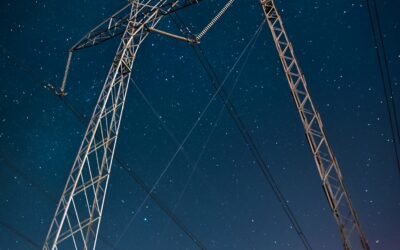
Power Exchanges in India – Overview and Way Forward
Abstract Currently, two energy exchanges in India, the Indian Energy Exchange and Power Exchange of India Ltd, are operating under the guidance of the CERC. Surprisingly, the development of an electricity market is the responsibility of regulators, in accordance...
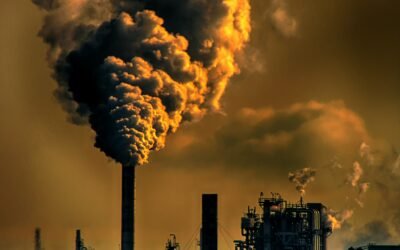
Unbundling in the Indian Oil and Gas Downstream Sector
Abstract Bundling means bringing many different activities into one set, and unbundling means dividing different activities into different sets. Unbundling helps to reduce the chances of monopoly and exploitation of consumers by the companies as well as it creates...
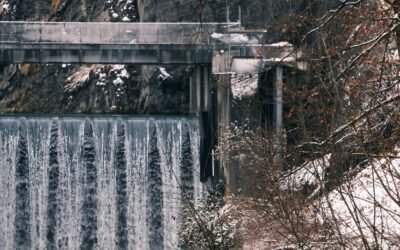
Hydropower and Human Rights: Revisiting the World Commission on Dams Report
Abstract This article briefly examines the urgent need for a re-opening or re-creation of the World Commission on Dams Report issued in 2000. The World Commission on Dams concluded that inclusion and participation are key elements that are needed in hydropower...
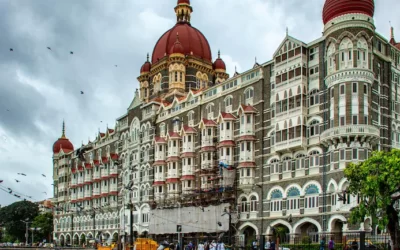
Copyright Protection to Architectural Works and Trademark Protection to Buildings under the Indian Regime
Abstract The infringement of architectural works, in terms of their copyright and trademark, is an issue which requires a thoughtful understanding of the protection provided to works when they are distributed, reproduced, publicly displayed, performed, or further...

Expansion of Highways, Environmental Clearances, and the 100 km Rule: To Segment or To Not?
Abstract Today’s India is heading towards large scale socio-economic development majorly through the infrastructure route – particularly, the transportation sector. For example, the Bharatmala Pariyojana project which targets the interconnection of various highways...

Critical Analysis of the Anti-Competitive Structure in the Indian Coal Sector
Abstract The ministry of coal is the body responsible for policy formulation with regard to the development and exploitation of coal resources in the Country. It was during 1971 – 73 that the Indian Government began nationalizing India’s coal mines dreading the...

The Relationship between Prolongation of Contracts and Liquidated Damages: An Analysis of Welspun Specialty Solutions v. ONGC
Abstract We quite often come across judgments of the High Court and the Supreme Court of India (“SCI”) in their jurisdiction under Section 34 or 37 of theArbitration and Conciliation Act, 1996 (or an appeal to the SCI underArticle 136 of the Constitution of India),...

Variation: In the Realm of Construction Disputes
Abstract The construction sector has a huge impact on the economy of a developing nation like India. But it is disrupted by construction disputes, a majority of which stem from “changes” in construction contracts relating to the scope, quantity, quality of work,...

Carbon Tales- An Attempt to Find a Solution to the Current Energy Crisis in India
Abstract For developing countries like India, the Energy sector holds a lot of value. Modern energy services are essential for meeting basic societal demands, supporting economic progress, and promoting human development. Every production and consumption activity...

The Telcom Story: Ringing in the Reforms
Abstract The Government of India has recently announced a set of structural and procedural reforms to protect and generate employment opportunities, promote healthy competition, protect the interests of consumers, infuse liquidity, encourage investment and reduce the...
About Us
The Indian Journal of Projects, Infrastructure and Energy Law (IJPIEL) is a student-run law
journal and blog which was founded in July 2020 by a group of students from Universities
across the nation, led by its founder, Naman Anand.
Other Links
Our Story
Journal
Contact Us
Team
Follow Our Social Media
