
Blog
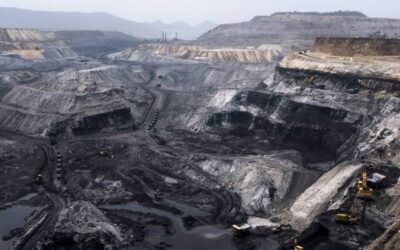
The Mines and Minerals (Development and Regulation), 2021 (Amendment Act): Examined
Abstract The mining and mineral industry is a vital contributor to India's economy as it forms the base for the use of fundamental raw materials for many import industries. The sector is characterised by a vast number of smaller mines and other large-scale mining...
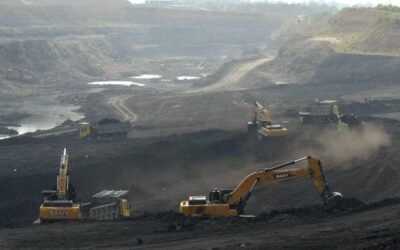
Mine Closure and Justice Implications
Abstract The current energy transition has brought about a rise in demand for minerals, key to the just transition from fossil fuels to cleaner energy sources. These are known as critical minerals. Critical minerals are fundamentally the essential component of current...

Recycling of Ships: The Environment and the Efforts to Mitigate the Impact on the Environment
Abstract Recycling of a ship denotes the end of a forgone sea-worthy vessel. In fact, a classical definition for recycling of a ship would be the end of the circle of life. While one of the foremost reasons for recycling a ship is to provide support to a degenerating...

Impact of COVID-19 on Civil Aviation Industry- More Troubles on the Way?
Abstract Covid- 19 has created havoc all across the world with loss of lives and derailing the world economy. India is not immune to this pandemic and Covid has completely dented the economy. Moody estimates India’s GDP to grow at 9.4 percent from their initial...

NITI Aayog’s Project for Great Nicobar Island
Abstract The NITI Aayog has come up with a plan for the “Holistic Development of the Great Nicobar Island” situated at the Andaman & Nicobar Islands. The plan aims to develop a new Greenfield city with a diverse and robust economy based on Maritime services and...

Return to the Build Operate Transfer Model – A Move Accelerated by the Covid-19 Pandemic
Abstract Infrastructure projects for developing countries like India are essential for accelerating growth, both economic and social, related to faster, better modes of communication. The communication can be in the form of individuals plying on roads and highways or...

The Mystery of the Efficient and Responsible Litigant: Notes on a Data-Driven Analysis of Litigation in Public Contracts from the Delhi High Court
Eleven years ago, India introduced the National Litigation Policy 2010 (“NLP 2010”) with the intention of reducing government litigation in courts by transforming government into an “efficient and responsible litigant”. [1] To what extent has the government been...

The Insolvency Code: Bankrupting ARCs
Abstract Section 238A of the Insolvency and Bankruptcy Code, 2016 ("IBC") provides for the provisions of the Limitation Act, 1963, to apply to the IBC. While hearing an appeal petition in the case of Bishal Jaiswal v. Asset Reconstruction Company (India) Ltd &...

The Switch to Sustainable and Greener Arbitration: How the “New Normal” Revolutionizes Procedural Aspects in Arbitration
Abstract Before the COVID-19 pandemic, filing and other arbitration-related procedures were highly detrimental to the environment given the excessive use of paper, transportation to the venue of the hearing, and other related reasons. However, the COVID-19 pandemic...

Liabilities Arising from Vessels: An In-Depth Analysis amid Recent Maritime Disasters
Abstract In the past few months, major maritime disasters have occurred that pave the path for jurisprudential growth in the maritime sector, such as the Ever Green Suez Canal incident, X-Press Legal Sri Lankan Sea Incident, and the Seacor Power Lift Boat Accident....
About Us
The Indian Journal of Projects, Infrastructure and Energy Law (IJPIEL) is a student-run law
journal and blog which was founded in July 2020 by a group of students from Universities
across the nation, led by its founder, Naman Anand.
Other Links
Our Story
Journal
Contact Us
Team
Follow Our Social Media
